In today’s competitive healthcare industry, hiring the right doctor is no longer just about filling a vacancy. Hospitals and healthcare organizations must focus on long-term workforce planning, retention, patient satisfaction, and operational stability.
A wrong hiring decision can create serious challenges:
Patient dissatisfaction
Department instability
Increased recruitment costs
Delayed clinical operations
Revenue loss
Higher attrition rates
This is why modern medical recruitment requires a strategic, structured, and transparent approach.
Many hospitals still depend on outdated hiring practices, delayed communication, or unverified sourcing methods. As a result, even after investing time and money, the organization may struggle with candidate backouts, poor fitment, or low retention. In this blog, we explain the biggest mistakes hospitals make while hiring doctors, why these issues occur, how they impact healthcare operations, and when hospitals should adopt smarter recruitment practices.
Why Doctor Hiring Has Become More Challenging
The healthcare sector has evolved rapidly over the last few years. Doctors today evaluate opportunities very differently compared to earlier hiring trends. Compensation is important, but it is no longer the only deciding factor.
Before accepting an offer, doctors usually evaluate:
Hospital reputation
Work environment
Clinical infrastructure
ICU setup
OPD load
Duty schedules
Technology exposure
Career growth opportunities
Work-life balance
Accommodation support
Leadership and management culture
This shift means hospitals must now focus on employer branding, recruitment transparency, and long-term alignment rather than only offering higher salaries.
Mistake 1: Hiring in Urgency Without Proper Evaluation
One of the most common hiring mistakes occurs when hospitals urgently need a doctor and finalize recruitment too quickly.
When recruitment decisions are made under pressure:
Profile screening becomes weak
Skill alignment is ignored
Cultural fit is overlooked
Candidate expectations remain unclear
This often results in:
Early resignations
Joining dropouts
Department instability
Increased rehiring costs
Why This Happens
Hospitals frequently face:
Sudden resignations
Expansion of departments
Increased patient flow
New ICU or OT setup requirements
Because of urgency, many organizations skip structured evaluations.
How to Avoid This Mistake
Hospitals should implement:
Structured screening processes
Department-specific evaluations
Technical discussions
Reference verification
Transparent expectation alignment
Professional medical recruitment support helps reduce rushed hiring decisions by maintaining access to pre-screened doctor databases.
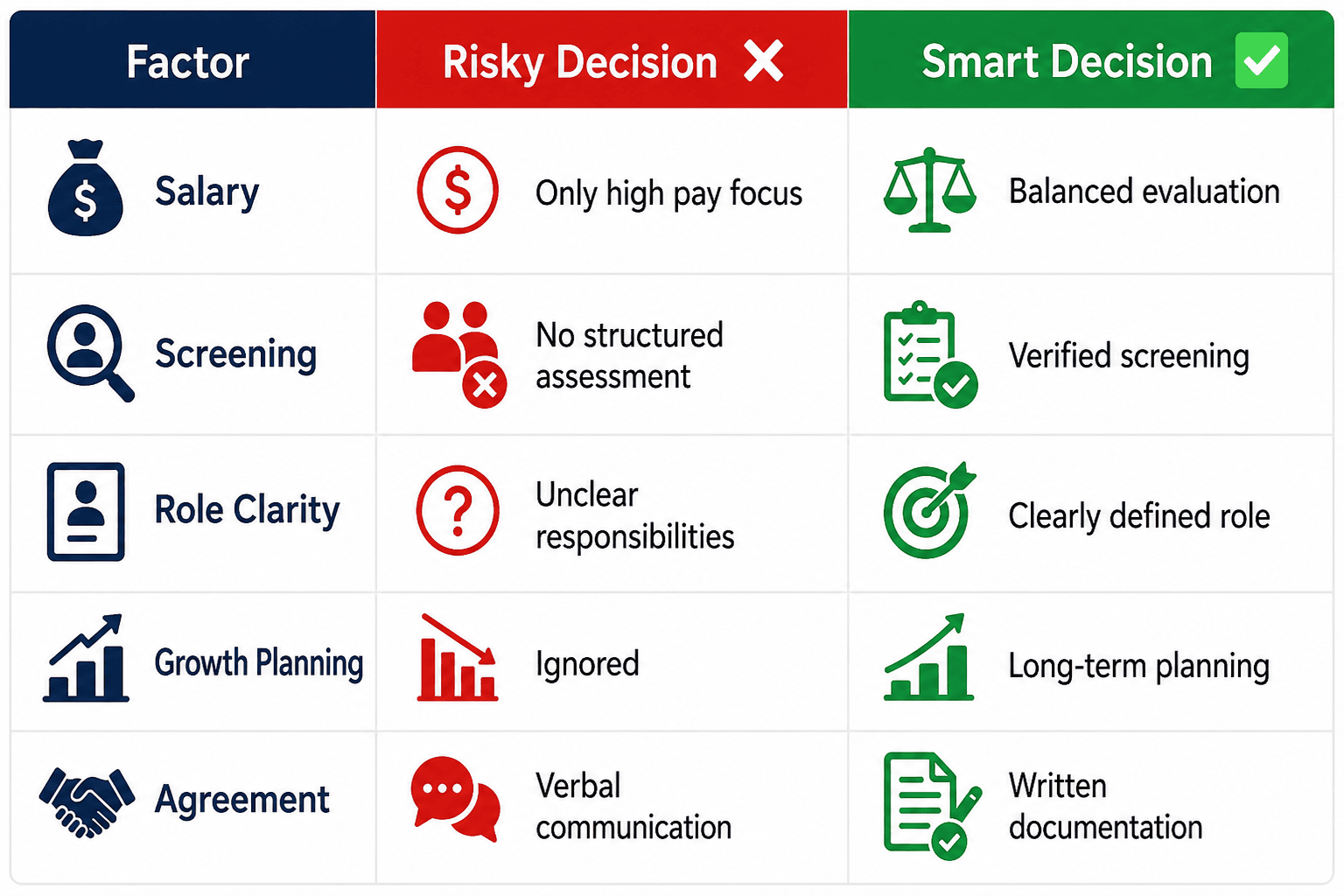
Mistake 2: Focusing Only on Salary Negotiation
Many hospitals assume that increasing salary automatically guarantees successful hiring.
However, doctors usually evaluate multiple non-financial factors before joining.
What Doctors Actually Evaluate
- Work Environment
Doctors prefer supportive and professionally managed hospitals.
- Clinical Exposure
Many specialists look for advanced procedures, case variety, and technology access.
- Infrastructure
ICU support, Cath Labs, modular OTs, diagnostics, and emergency setup strongly influence decisions.
- Career Growth
Doctors want opportunities for:
Academic exposure
Department growth
Leadership responsibilities
Long-term stability
Why Salary-Only Hiring Fails
A candidate may accept a high salary initially but leave within a few months if:
Work pressure is excessive
Management communication is poor
Infrastructure is weak
Professional growth is limited
Smart Hiring Approach
Successful hospitals focus on:
Balanced compensation
Professional environment
Transparent expectations
Long-term engagement
Mistake 3: Delayed Recruitment Coordination
Speed plays a major role in healthcare hiring.
Highly qualified doctors often receive multiple offers simultaneously.
If hospitals delay:
Interview scheduling
Feedback sharing
Salary approval
Offer confirmation
The candidate may accept another opportunity.
Why Recruitment Delays Hurt Hospitals
Delayed hiring affects:
OPD operations
Emergency coverage
ICU management
Surgical schedules
Patient trust
It also increases recruitment costs because the process must restart.
How to Improve Recruitment Speed
Hospitals should:
Define approval timelines
Conduct fast interview coordination
Share structured feedback quickly
Maintain regular candidate communication
Modern placement consultants for doctors often help reduce hiring delays through dedicated coordination systems.
Mistake 4: Ignoring Employer Branding
Today, doctors research hospitals before attending interviews.
They check:
Website quality
Google reviews
Social media presence
Infrastructure visibility
Employee feedback
Patient reviews
Online reputation
Why Branding Matters in Medical Recruitment
A hospital with weak digital visibility may struggle to attract experienced specialists even if salary offerings are competitive.
Doctors prefer organizations that appear:
Stable
Professional
Growth-oriented
Technologically advanced
How Hospitals Can Improve Their Brand
Maintain Active Social Media Presence
Share:
Clinical achievements
Technology updates
Hospital events
Team culture
Patient success stories
Improve Website Presentation
Clearly display:
Infrastructure
Departments
Medical technology
Leadership team
Career opportunities
Build Trust Through Transparency
Doctors value clear communication about:
Duty structure
Incentives
Accommodation
Work expectations
Mistake 5: Depending Only on Traditional Hiring Methods
Posting vacancies on job portals alone is no longer enough.
Modern healthcare hiring requires:
Active sourcing
Digital outreach
Database recruitment
Relationship-based networking
Employer branding
Targeted communication
Why Traditional Hiring Is Less Effective
Many specialist doctors:
Are not actively applying
Prefer confidential opportunities
Respond better to personalized outreach
Modern Medical Recruitment Strategies
Database Hiring
Accessing verified doctor databases improves sourcing speed.
Social Media Recruitment
Platforms like LinkedIn help hospitals connect with passive candidates.
Structured Screening
Better evaluation improves long-term retention.
Recruitment Partnerships
Working with experienced doctor placement agency partners reduces operational workload.
How Smart Recruitment Improves Hospital Performance
Effective doctor hiring directly impacts:
Patient satisfaction
Department growth
Revenue generation
Operational stability
Hospital reputation
Hospitals with strong recruitment systems experience:
Faster closures
Better retention
Lower hiring costs
Improved workforce quality
Why Hospitals Work With Professional Recruitment Partners
Specialized healthcare recruitment companies understand:
Doctor expectations
Department requirements
Market salary trends
Candidate availability
Relocation challenges
This helps hospitals reduce:
Hiring risk
Screening workload
Coordination delays
Candidate mismatch
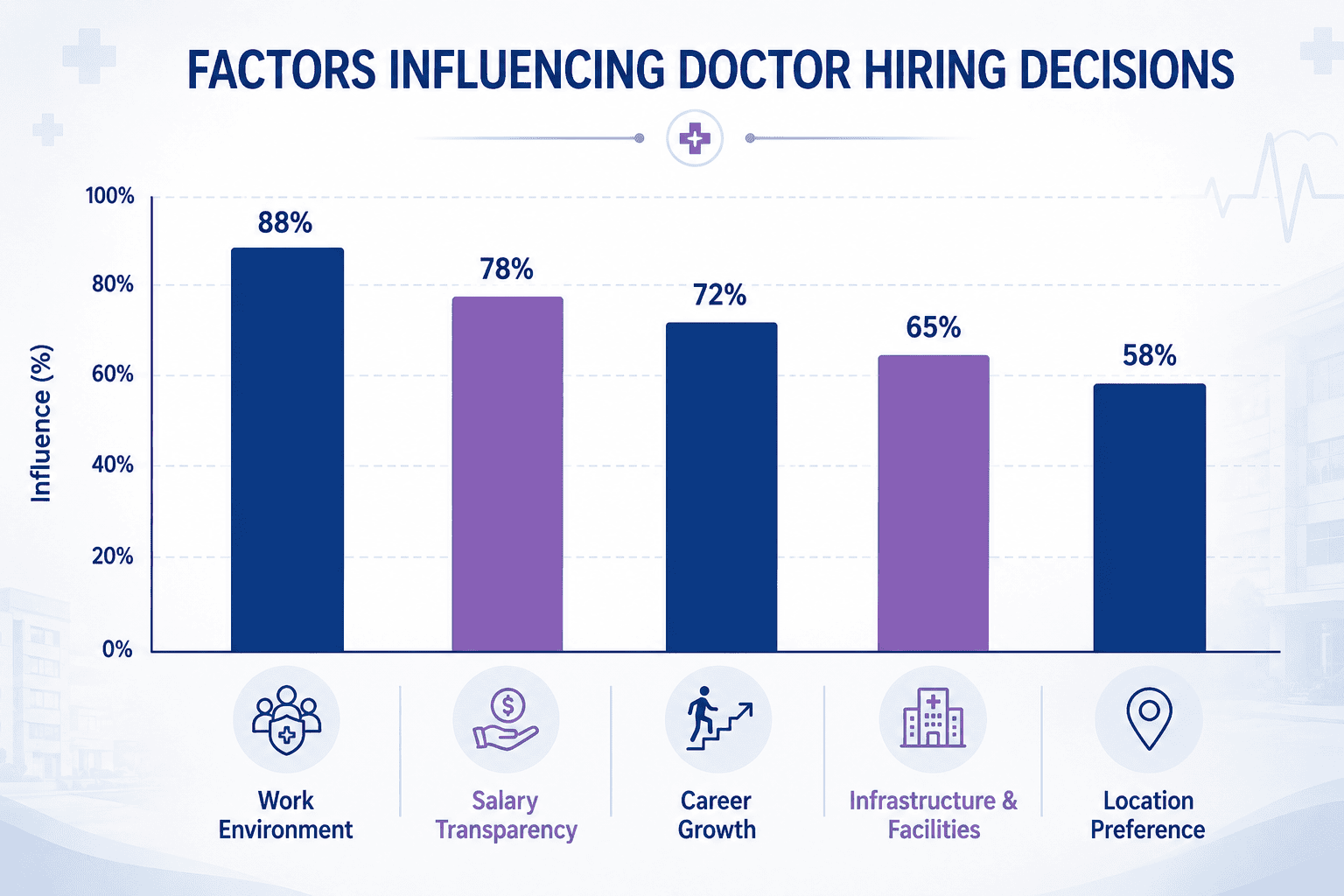
Doctor Hiring Decision Factors
Factor | Importance |
Work Environment | Very High |
Salary Transparency | High |
Infrastructure | High |
Career Growth | High |
Location | Moderate |
Management Culture | Very Important |
When Hospitals Should Improve Their Recruitment Strategy
Hospitals should rethink recruitment processes when:
Doctor attrition increases
Joining ratios decline
Recruitment timelines become longer
Departments remain vacant
Candidate dropouts become frequent
Why Long-Term Hiring Strategy Matters
Healthcare recruitment is not only about filling vacancies.
It is about:
Building stable departments
Improving patient care
Supporting operational continuity
Creating strong medical teams
Hospitals that invest in structured recruitment systems gain long-term advantages in retention, reputation, and growth.
Frequently Asked Questions
How can hospitals improve doctor retention?
Hospitals can improve retention through transparent communication, balanced workload, supportive work culture, and long-term career growth opportunities.
Why do doctors reject offers after interviews?
Doctors may reject offers due to delayed communication, unclear role expectations, infrastructure concerns, or mismatch in professional goals.
How does medical recruitment differ from general hiring?
Healthcare recruitment requires specialized screening, department-specific evaluation, clinical understanding, and relationship-based sourcing.
When should hospitals work with placement consultants for doctors?
Hospitals should consider recruitment support for urgent hiring, specialist positions, super-specialty roles, or difficult-to-close vacancies.
Why is hospital branding important for recruitment?
Doctors evaluate online reputation, infrastructure, work culture, and management visibility before accepting opportunities.