
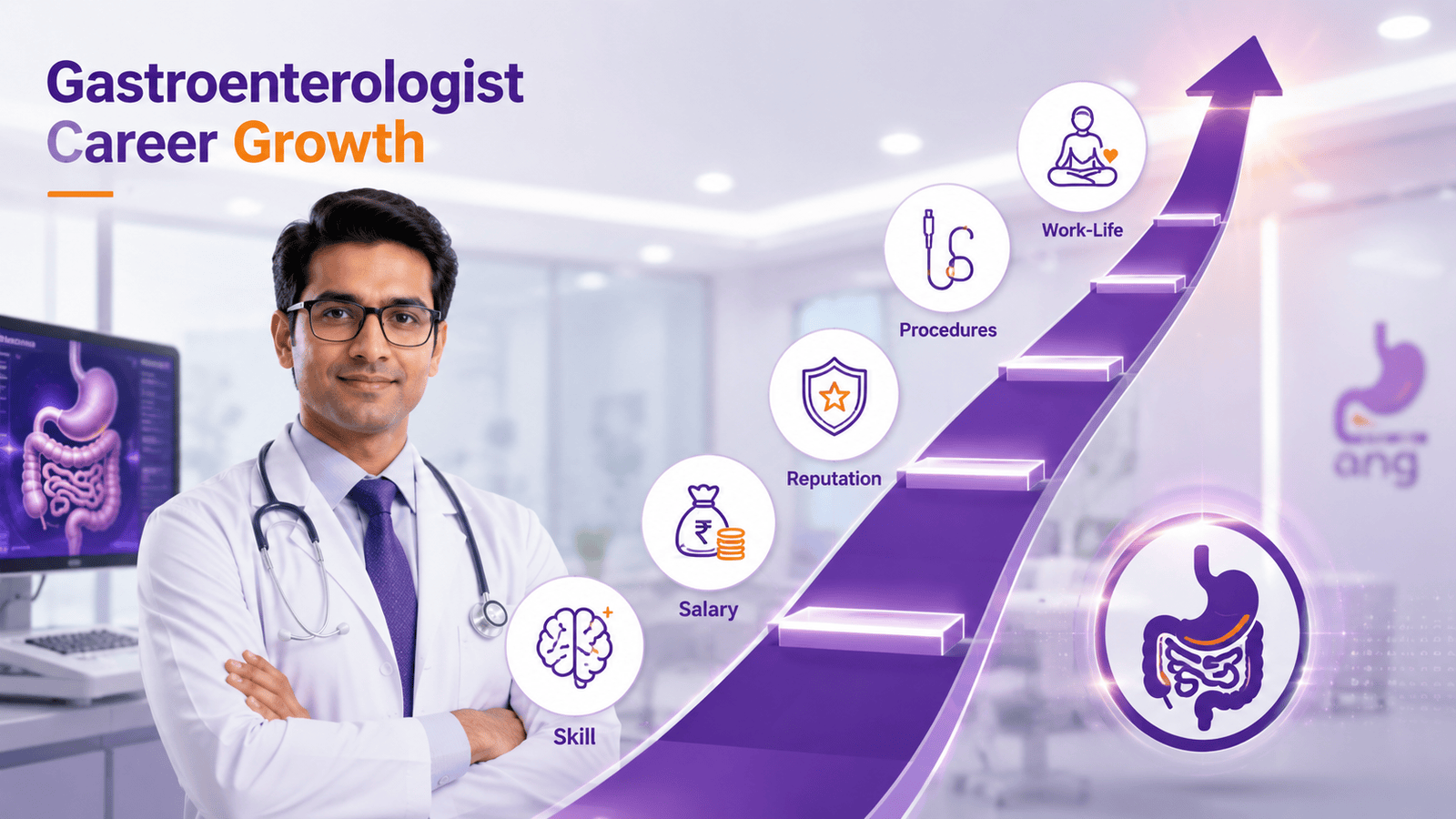
How Gastroenterologists Can Build a Strong Long-Term Career in India
Building a successful medical career is not only about earning a degree and joining a hospital. For a Gastroenterologist, long-term success depends on the right mix of clinical growth, hospital environment, professional reputation, procedure exposure, financial planning, and career timing.
In India, the opportunities for digestive and liver care specialists are growing steadily. At the same time, competition is also becoming sharper. A doctor may begin as a talented clinician, but building a long and respected career requires more than clinical knowledge alone. It requires vision.
Whether someone is working as a Gastroenterology Consultant in a multispeciality hospital or planning the next step as a Consultant Gastroenterologist, the real question is this: how can a doctor build a career that remains stable, rewarding, and respected for years to come?
Why Long-Term Career Planning Matters for a Gastroenterologist?
In the early years, many doctors make career decisions based mainly on salary or location. While these are important, they are only one part of the bigger picture.
A long-term career in gastroenterology should help a doctor achieve:
consistent clinical growth
better procedure exposure
stable earnings
stronger hospital reputation
work satisfaction
long-term credibility in the medical community
A short-term offer may look attractive, but if the hospital lacks proper infrastructure, support staff, or patient flow, the doctor’s career can stagnate. That is why long-term planning matters.
A good career decision should answer three questions:
How will this role improve my clinical skills?
Why will this hospital help my professional growth?
When should I stay, move, or expand my career path?
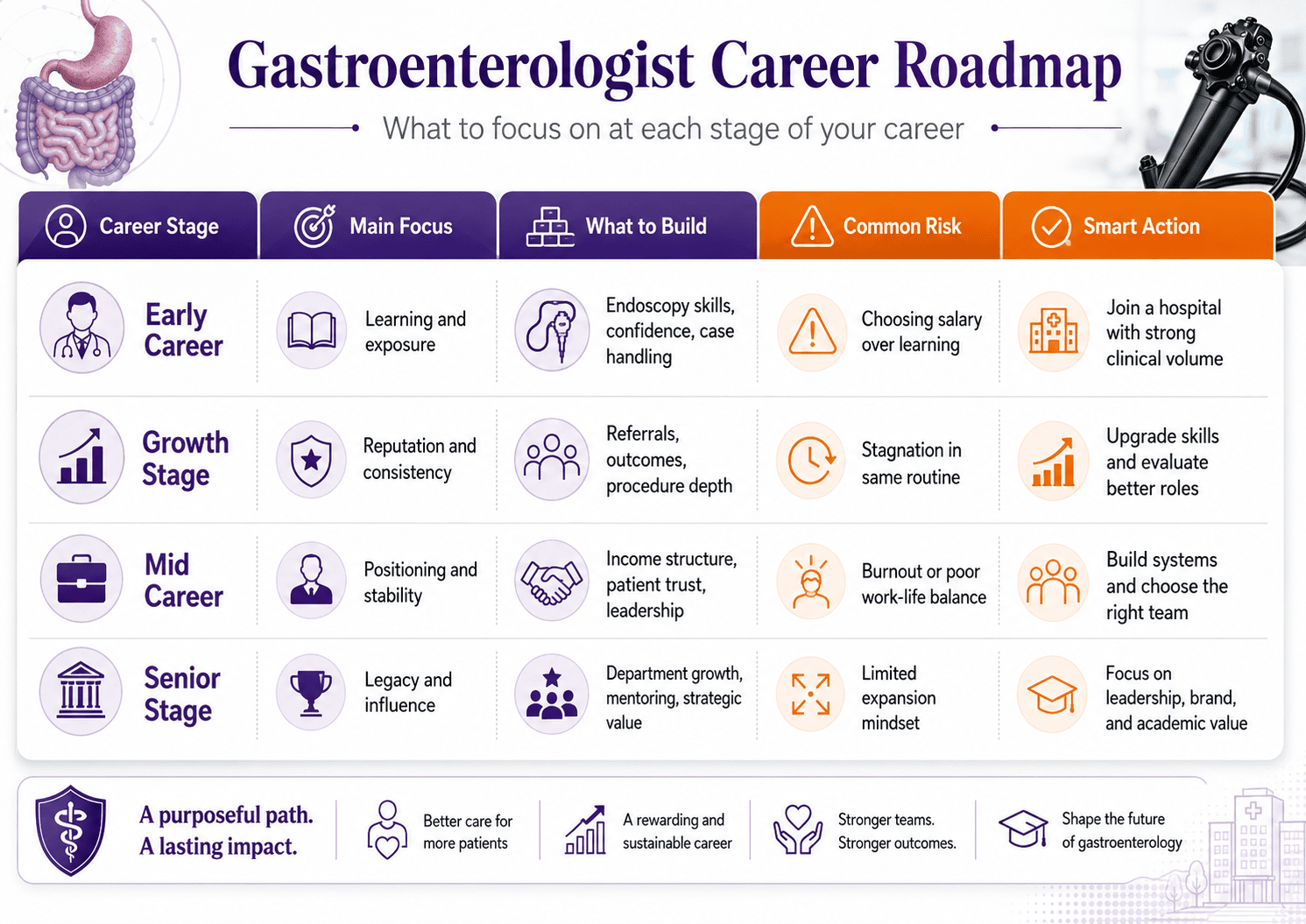
How Gastroenterologists Can Build a Strong Long-Term Career in India?
The first step is to think beyond the designation. A doctor should not evaluate a role only by title. A career becomes strong when it is built on the right foundation.
1. Choose the right hospital, not just the right package
A high salary may solve short-term needs, but the right hospital shapes long-term growth.
Before joining, a doctor should evaluate:
patient volume
OPD and IPD strength
endoscopy load
ERCP or EUS availability
ICU and OT backup
support team quality
hospital reputation
payment history
long-term role clarity

When Should a Gastroenterology Consultant Change Jobs?
Changing jobs is not a sign of instability if done for the right reasons. In fact, strategic career movement can accelerate growth.
A doctor should consider a move when:
procedure exposure has become limited
there is no opportunity for academic or professional growth
salary payments are delayed repeatedly
hospital management lacks transparency
workload is high but compensation is unfair
there is no scope for independent clinical decision-making
the location no longer supports family or lifestyle needs
A move should not be made emotionally after one difficult month. It should be made after careful evaluation of growth, stability, and professional direction.
Why Skill Growth Matters More Than Job Title?
Many doctors focus heavily on the designation printed on paper. But in super-speciality practice, real value comes from the depth of work.
A successful Gastroenterologist should keep growing in areas such as:
diagnostic endoscopy
therapeutic endoscopy
ERCP
EUS
GI bleeding management
liver disease management
IBD care
multidisciplinary case handling
patient communication
documentation and clinical decision-making
In the long run, the market rewards doctors who are dependable, confident, and clinically sound. A specialist known for outcomes, judgment, and patient trust will always have stronger career options.
This is why a doctor should ask not only, “What is my title?” but also, “What will I learn here over the next two years?”
How to Build Professional Reputation in the Medical Field?
A long-term career in India is strongly influenced by reputation. Referrals, trust, and visibility matter.
A Gastroenterologist can build a stronger reputation by:
maintaining ethical practice
giving clear patient counselling
building trust with referring physicians
staying updated with current treatment approaches
participating in CMEs and conferences
publishing case studies or academic contributions when possible
maintaining professional communication with hospital leadership
being reliable in emergencies and follow-ups
Doctors often underestimate how far professional behaviour goes. Clinical skills bring respect, but consistency builds long-term credibility.
A doctor who is known for trustworthiness, calm decision-making, and patient-centred care often sees faster career growth than someone who relies only on technical skill.
How the Right City and Hospital Ecosystem Influence Career Growth
Not every good career must be built in a metro city. Many Gastroenterologists today are creating successful careers in Tier 2 and Tier 3 cities because the need is high and specialist availability is lower.
However, a doctor must examine the ecosystem carefully.
Important questions include:
Does the city have enough patient demand?
Is the hospital serious about building the department?
Is there diagnostic and procedural support?
Is the management open to growth and investment?
Is the quality of life suitable for the doctor’s family?
Is there a long-term scope to build a name in the region?
Sometimes a smaller city offers faster reputation growth, more patient ownership, and stronger earning potential than a crowded metro market. What matters is not only the city size, but the career fit.
Why Financial Planning Is a Career Strategy, Not Just a Salary Issue?
A strong career is not built only by increasing monthly income. It is built by managing income wisely and choosing the right compensation model.
A doctor should understand:
fixed salary
incentives
revenue share
endoscopy or procedure share
accommodation support
joining bonus, if any
annual revision clarity
leave policy
tax planning implications
Many doctors accept offers without understanding the complete financial structure. Later, dissatisfaction begins.
A smart long-term professional asks for clarity before joining. A stable and transparent compensation structure is often better than a vague “high package” that is difficult to realise in practice.
How Gastroenterologists Can Avoid Common Career Mistakes?
Even highly skilled doctors sometimes slow their own growth by making avoidable mistakes.
Common mistakes include:
joining only for salary
ignoring hospital reputation
not checking infrastructure
failing to ask about patient load
overlooking support systems
moving too frequently without strategy
neglecting networking and referrals
not updating skills regularly
underestimating the importance of work culture
not documenting terms clearly before joining
Career growth in medicine is cumulative. Good decisions create momentum. Poor decisions create frustration.
The best careers are built when a doctor combines clinical excellence with wise decision-making.
Why Personal Branding Matters for a Consultant Gastroenterologist?
Today, a doctor’s long-term growth is also influenced by visibility and credibility.
Personal branding does not mean self-promotion in an artificial way. It means building a professional identity that reflects expertise and trust.
A doctor can strengthen personal branding by:
keeping a well-written professional profile
being active in CMEs and conferences
contributing educational content when appropriate
maintaining strong relationships with referring doctors
building a good track record with patients
being known for a specific strength or clinical area
Over time, this creates a professional identity that supports better job offers, stronger referrals, and greater career security.
FAQs
1. How can a Gastroenterologist build a strong career in India?
A Gastroenterology Consultant can build a strong career by choosing the right hospital, gaining good procedure exposure, improving clinical skills, and maintaining a strong professional reputation.
2. When should a Gastroenterology Consultant change jobs?
A Gastroenterology Consultant should consider changing jobs when there is limited growth, poor infrastructure, delayed salary, unclear role expectations, or lack of procedure exposure.
3. Why is hospital setup important for a Consultant Gastroenterologist?
A proper hospital setup helps a Consultant Gastroenterologist perform better. Endoscopy facilities, ICU support, trained staff, and patient flow are important for career growth.
4. Is salary the most important factor for Gastroenterologists?
Salary is important, but it should not be the only factor. Learning, procedure exposure, hospital reputation, work culture, and long-term stability are equally important.
5. How can ANG Placement help Gastroenterologists?
ANG Placement & Staffing Solutions Pvt. Ltd. helps Gastroenterologists find verified hospital opportunities with better salary clarity, role transparency, and long-term career fit.